Ad Vitam Ost . Der kartellverband hat 117 vollmitgliedsverbindungen in deutschland, der schweiz, österreich (wobei die österreichischen verbindungen den ökv bilden; Par peur d’être repéré et persécuté ad vitam æternam par une horde de racailles. immortel ad vitam on Tumblr from www.tumblr.com Domine, sancte pater, omnipotens aeterne deus: Bile is a unique and vital aqueous secretion of the liver that is formed by the hepatocyte and modified down stream by absorptive and secretory properties of the bile duct epithelium. This paper, responding to the murder of eric garner and ongoing “drama of race” in the u.s.
Pandas Select Columns Not In List. The following code shows how to select columns by name: Df.loc[:,[price,volume]] #or df.loc[:,:] a useful way to query (and quickly) is to use masks to specify which.
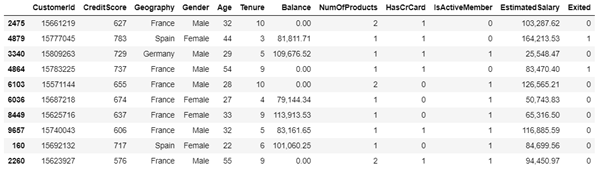
Most Important Pandas Functions(Full Tutorial) Towards Data Science Towards Data Science from towardsdatascience.com
Select any row from a dataframe in pandas | python. Use dataframe.loc[] and dataframe.iloc[] to select a single column or multiple columns from pandas dataframe by column names/label or index position respectively. Select columns by name df.filter(items=['one', 'three']) one three mouse 1 3 rabbit 4 6 select columns by regular expression df.filter(regex='e$', axis=1) #ending with *e*, for checking containing just use it without *$* in the end one three mouse 1 3.
How to select multiple columns in a pandas dataframe. Note that the column located in the last value in the range (3) will not be included in the output. In this example, there are 11 columns that are float and one column that is an integer.
Isin ([7, 9, 12])] Team Points Rebounds Blocks 1 A 7 8 7 2 B 7 10 7 3 B 9 6 6 4 B 12 6 5.
That is how you access a single column of your data frame. We will see how to select the specific and multiple columns in the following examples. However for multiple columns we can pass a list, or a colon to get all:
Columns Can Be Selected By Their Index Positions, Labels, Or Datatypes.
Select all columns, except one given column in a pandas dataframe. Select columns by name df.filter(items=['one', 'three']) one three mouse 1 3 rabbit 4 6 select columns by regular expression df.filter(regex='e$', axis=1) #ending with *e*, for checking containing just use it without *$* in the end one three mouse 1 3. To select only the float columns, use wine_df.select_dtypes(include = ['float']).
Use Dataframe.loc[] And Dataframe.iloc[] To Select A Single Column Or Multiple Columns From Pandas Dataframe By Column Names/Label Or Index Position Respectively.
Also, refer to a related article how. Select any row from a dataframe in pandas | python. #select rows where 'points' column is equal to 7 df.
Where Loc[] Is Used With Column Labels/Names And Iloc[] Is Used With Column Index/Position.
Selecting columns using select_dtypes and filter methods to select columns using select_dtypes method, you should first find out the number of columns for each data types. How to select columns in pandas. Select rows where column value is in list of values the following code shows how to select every row in the dataframe where the ‘points’ column is equal to 7, 9, or 12:


Comments
Post a Comment